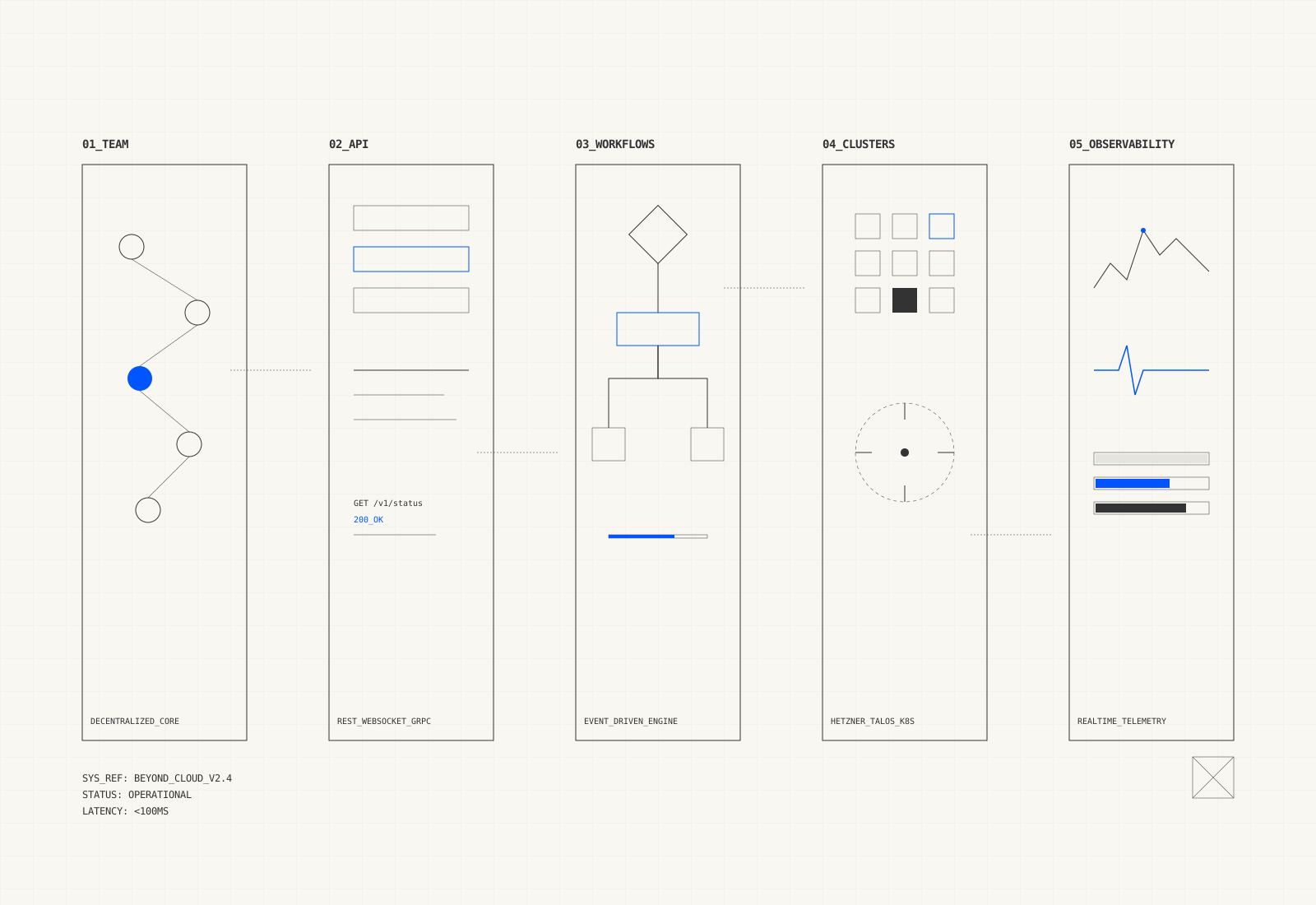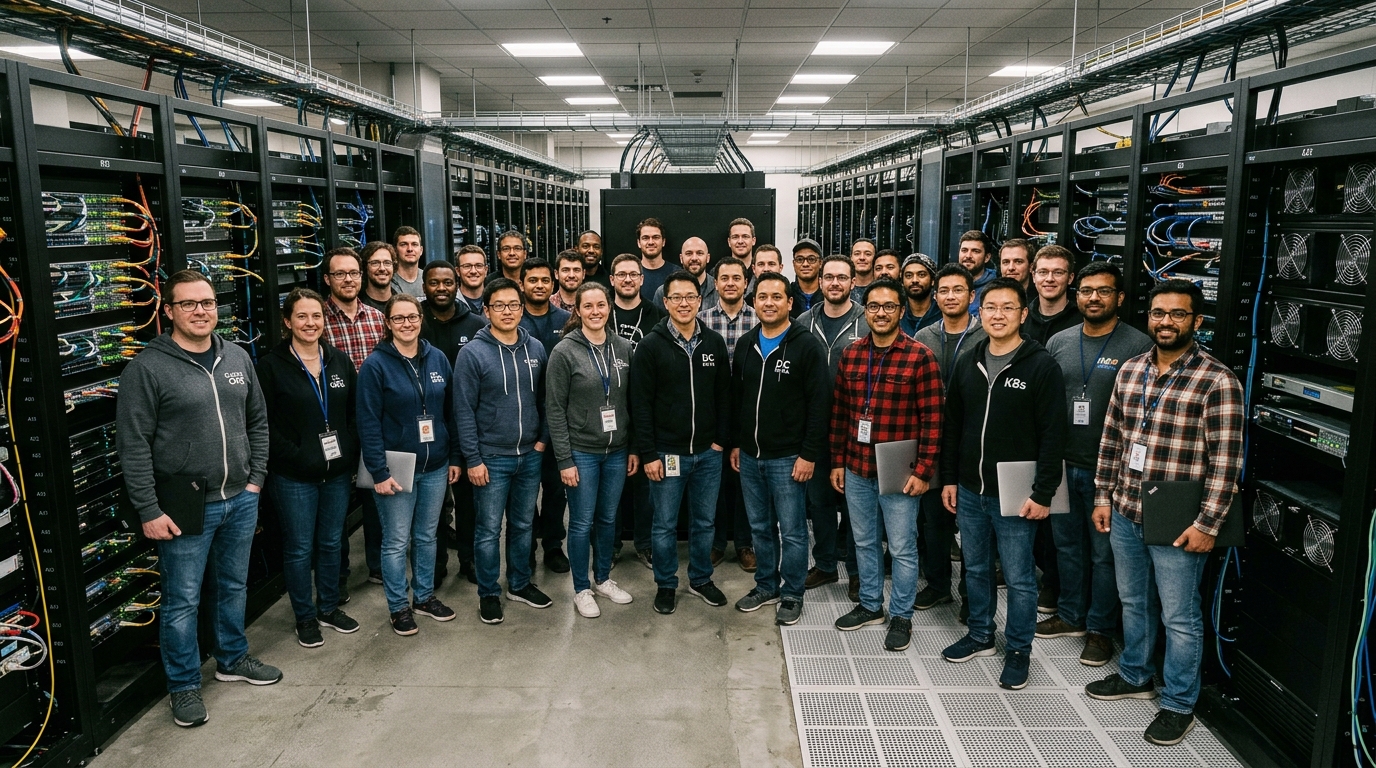
Around thirty-five Beyond Cloud team members standing together in a real data center aisle, smiling and looking toward the camera.
ABOUT / BEYOND CLOUD

We built Beyond Cloud to make infrastructure easier to read.

Beyond Cloud exists because infrastructure software is still too fragmented, too ceremonial, and too hard to trust once something slips off the happy path.

We build a calmer operating surface for clusters, workflows, and the teams responsible for keeping them healthy when a system is failing, retrying, or being explained under pressure.

  • Unified Go runtime
  • Workflow recovery
  • Encrypted secrets
  • Real-time cluster status
  • Audit-native control plane
  • Built for platform teams
About

Infrastructure software should read like the system it is actually operating.

Beyond Cloud builds infrastructure software for teams that want fewer seams between provisioning, workflows, audit, and day-two operations. The product, the runtime, and the company story are all trying to describe the same thing more clearly.

  • Built for

    Platform teams

    Clusters, workflow state, secrets, and recovery belong to one operating surface instead of being split across disconnected tools.

  • Runtime

    Unified Go boundary

    API, workflow execution, live updates, and audit stay inside the same control plane so the product surface matches the system underneath it.

  • Point of view

    Tell the truth about state

    The interface should still make sense when a request is partial, retrying, or under pressure instead of only reading well in the happy path.

Story

We want the company to feel like the product: coherent, calm, and hard to misread.

That shows up in the way we talk about the work, the way we shape the software, and the way we think about responsibility once infrastructure is moving in production.

Beyond Cloud started from a simple frustration: platform teams were still expected to reconcile provisioning, workflow state, secrets, and recovery across too many disconnected tools.

We wanted the system to read like the job actually feels when something is waiting, retrying, or half-finished.

Why we started

A calmer operating surface matters most when infrastructure gets messy and someone needs to make sense of it fast.

Started

2021

The company began around the idea that software should tell the truth about operational state.

Built for

Platform teams

Teams managing clusters, workflow execution, security boundaries, and day-two change.

The rebuild mattered more than the rebrand. We collapsed the runtime into one Go control plane because product credibility comes from system behavior, not just cleaner copy.

That shift reduced seams, removed handoffs, and made the product more honest about what is happening underneath it.

Why we rebuilt

The interface and the runtime now describe the same system instead of politely disagreeing with each other.

The Beyond Cloud team reviewing architecture notes during a working session.
Working session / product, architecture, and delivery in the same room.
Unified runtime

2024

API, workflow execution, and real-time updates now belong to one control plane.

We want the company to feel like the product: coherent, calm, and hard to misread under pressure.

That means staying close to operators, keeping security inside the workflow, and designing around recovery instead of pretending failure is someone else's layer.

How we work

Product, platform, and customer reality stay in the same conversation so the story never outruns the software.

Operating belief

One clearer story

Design, deploy, operate, learn, repeat without splitting responsibility into separate narratives.

A diagram showing a platform team, API, workflows, clusters, and observability connected through one control plane.
Blueprint / API, workflows, clusters, and observability tied together.
Approach

Most cloud software explains the workflow after it runs. We try to make the operating logic legible from the first step.

Beyond Cloud is built around the idea that infrastructure products should read like the real system they are controlling. The most useful surface is the one that still makes sense when something is retrying, partially complete, or being investigated by a tired human.

A diagram showing a platform team, API, workflows, clusters, and observability connected through one control plane.
  • Build for real operating conditions.

    That means failed steps, partial progress, retries, recovery, and interfaces that still make sense when someone is debugging under time pressure.

  • Keep trust native to the product surface.

    Identity, encrypted secrets, ownership boundaries, and audit trails belong inside the same workflow model as provisioning and cleanup.

  • Speed is part of credibility.

    Fast responses, fewer handoffs, and a smaller runtime surface all contribute to software that feels dependable in practice rather than just in pitch decks.

  • Clearer workflow accountability
  • Faster incident diagnosis
  • Less status reconciliation across tools
  • Recovery and audit inside the same control plane
Platform

The Beyond Cloud platform. One control plane for clusters, workflows, secrets, audit, and live operations. The platform is shaped around the operating logic teams actually need.

  • A diagram showing a platform team, API, workflows, clusters, and observability connected through one control plane.

    Unified Control Plane

    Clusters, workflows, secrets, audit, and live status belong to the same system instead of being split across unrelated surfaces.

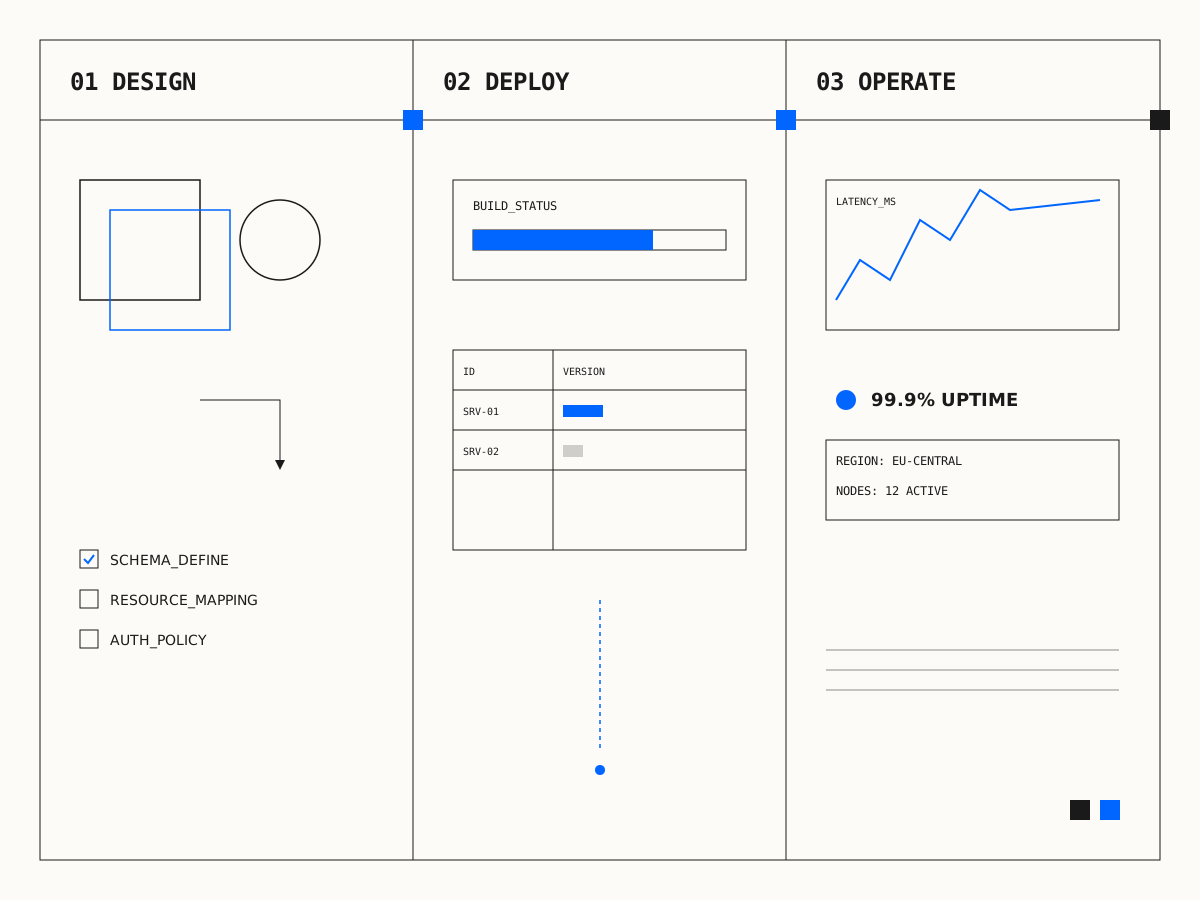
  • An editorial process diagram showing the rhythm between design, deployment, and operations.

    Workflow Engine

    Execution state, retries, recovery, and step history stay legible because they are part of the product model from the start.

  • Beyond Cloud team members standing together in a data center aisle.

    Operator Surface

    The interface is shaped around the people operating the system, not around a cleaner story that only works in perfect conditions.

Choose the operating model that fits how your team works.

  • PRODUCT

    We do not design a polished surface and then hand it to a separate systems layer. The interface, runtime, and workflow engine are part of the same product conversation.

  • PLATFORM
  • SECURITY
  • CUSTOMER
Team

We are a product company with an operator's posture.

The work spans interface design, systems behavior, workflow orchestration, security, and the realities of teams running infrastructure every day.

  • PRODUCT ENGINEERS

    Shaping the surface operators actually trust.

    The work is not just interface polish. It is turning provisioning, workflow visibility, and system state into something readable enough to act on.

    We care about what a product feels like when someone is triaging a real workflow, not only when a screenshot is being reviewed.

  • PLATFORM BUILDERS

    Owning the runtime, workflows, and infrastructure edges.

    We think in terms of failure modes, retries, recovery paths, and what the source of truth really is once a request leaves the UI.

    The platform gets stronger when the same team understands the cluster workflow and the operational consequences of every step.

  • CUSTOMER PARTNERS

    Staying close to the teams living with the consequences.

    The product gets better when the company listens to platform teams, security constraints, and operational reality instead of designing in isolation.

    We stay near the teams carrying the operational load so the software keeps earning trust after launch.

Beyond Cloud

One product surface. One control plane. One more readable operating story for the teams carrying production infrastructure.

Runtime Unified Go binary
Workflow model Retries, step history, recovery
State source Real infrastructure status